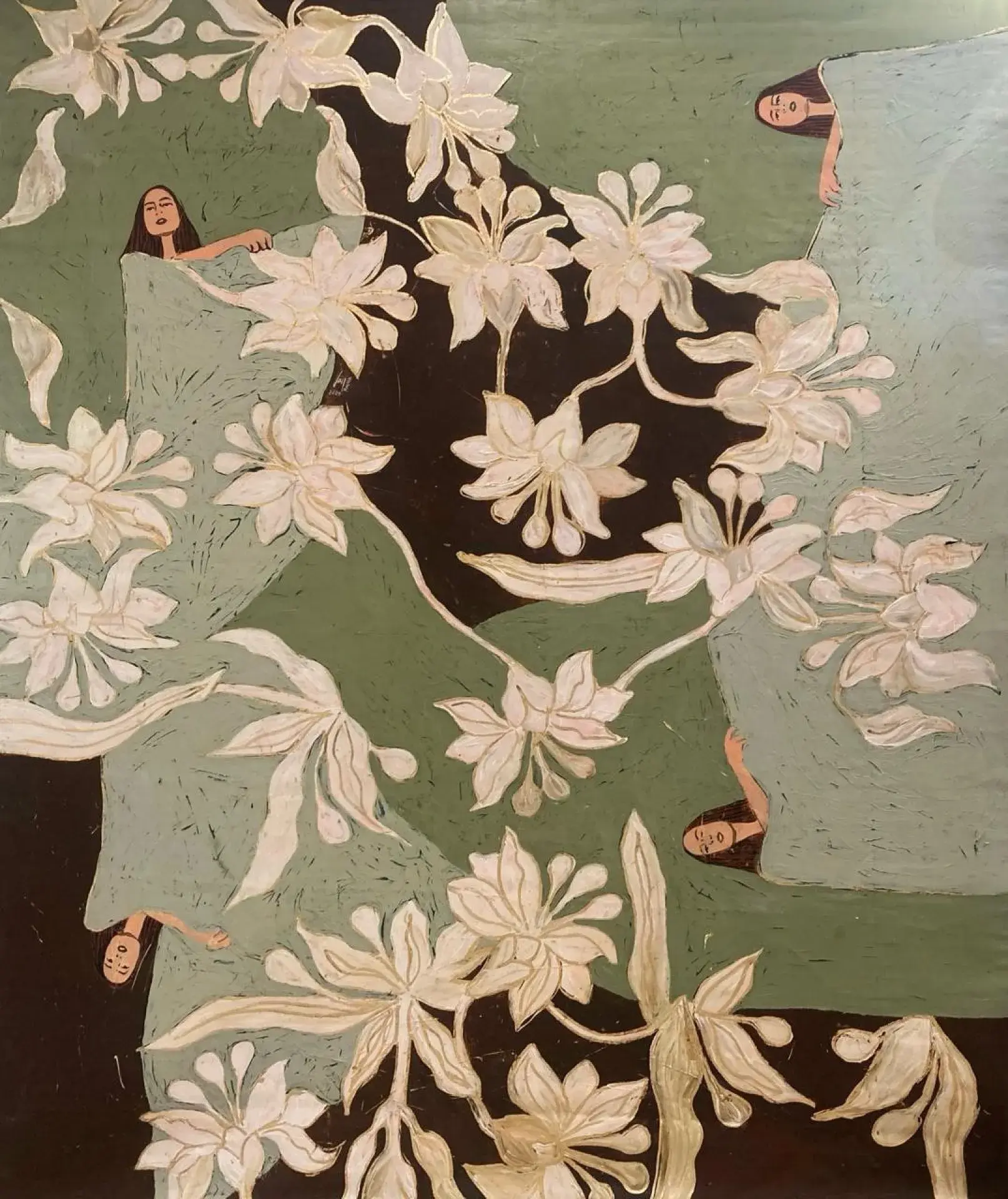
The works that Rasha Amin presents at the Wall stem from a pictorial practice conceived as a search for balance and inner fulfillment. An Egyptian artist born and raised in Cairo, Amin draws on a deep and stratified cultural heritage, which emerges in these works through an essential and highly evocative symbolic language.
The exhibited pieces are characterized by frontal, symmetrical compositions built around central forms that recall emblems or contemporary icons. Floral motifs, vegetal elements, and stylized anatomies merge into suspended images, where nature becomes a metaphor for transformation, rebirth, and continuity. The controlled use of color and matte backgrounds, combined with golden accents, gives the surfaces a precious and meditative quality, reinforcing the contemplative dimension of the works.
At the core of these works lies a reflection on the female experience, understood as a silent and resilient force. The figures, when present, are not defined individuals but symbolic presences—archetypes embodying delicacy, vulnerability, and emotional complexity. Even in the more abstract works, the dimension of the body remains subtly evoked through formal rhythms and organic correspondences.
Within the context of the Wall, Rasha Amin’s works function as visual thresholds: dense, concentrated images that invite the viewer to slow down and engage with a different sense of time. Rather than narrating, these works offer a sensory experience, opening an empathetic dialogue that transcends cultural and identity boundaries.