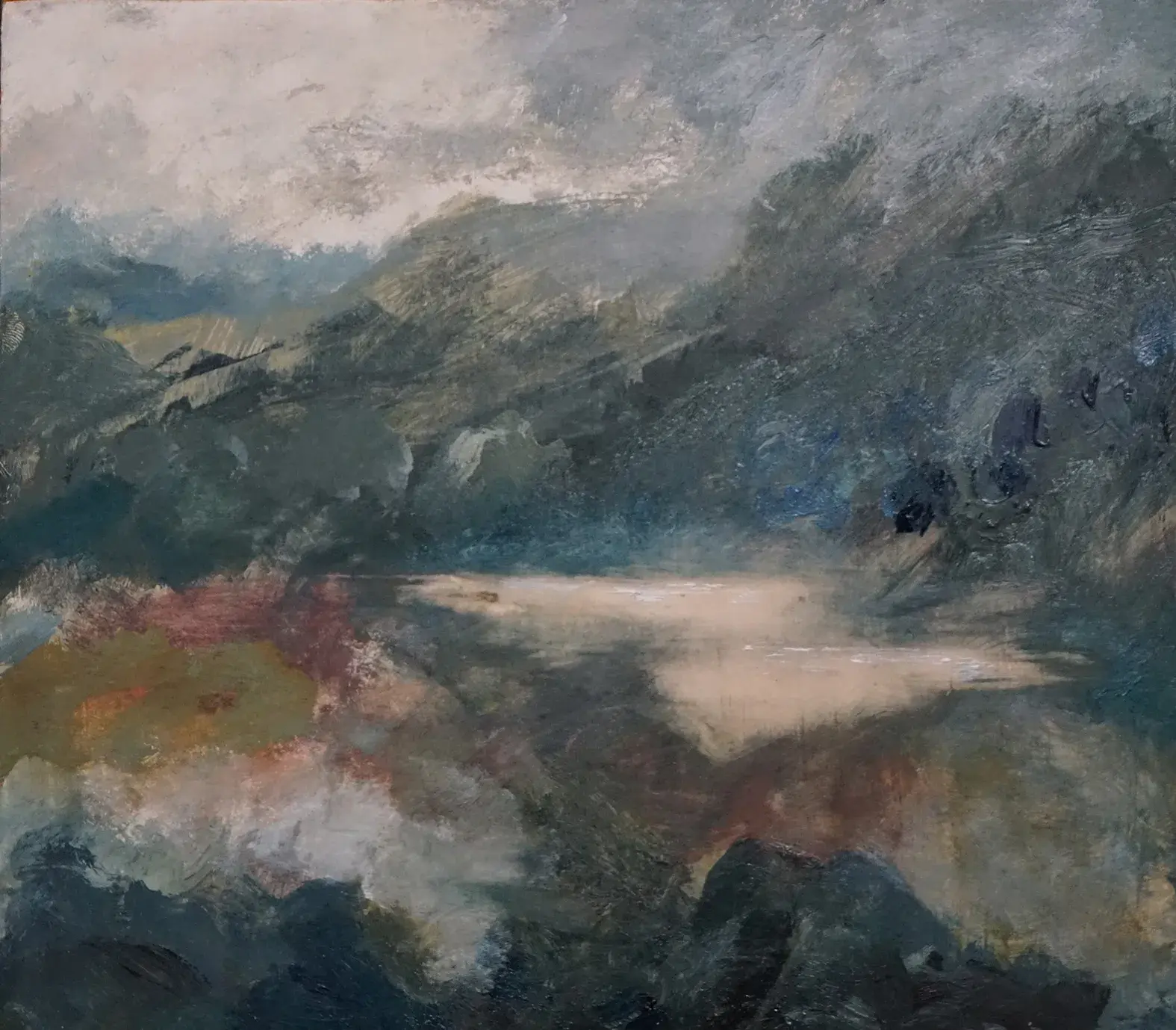
On Saturday, April 11th, at 5:30 PM, the Studio 71 art gallery (Via V. Fuxa 9) in Palermo will open its exhibition by Giovanna Vinciguerra and Moss Carroll, entitled:
DARNAU O DDAEAR
Darnau o Ddaear is an exhibition project developed between Wales and Sicily, conceived as a series of exhibitions that connect two geographically distant territories, yet profoundly connected by natural and cultural dynamics. Drawing inspiration from their respective regions of origin, Eryri and Etna, Welsh artist Moss Carroll and Sicilian artist Giovanna Vinciguerra establish a dialogue between their artistic practices, reflecting on cultural identities, ties to their native places, and experiences of crossing and discovering the other. The project thus takes shape as a meeting place between two landscapes and two imaginaries, in which geographical differences and profound affinities intertwine. Sculptures, installations, and paintings populate the rooms of the Studio 71 gallery in Palermo. Rocco Giudice writes in his introduction: “…what we witness is not a journey or a juxtaposition between two distant geographical realities, but the emergence and establishment of one and the other in a dimension, painting, which represents the common matrix.” And again: “Giovanna Vinciguerra inextricably links places and people, personal memories and broader recollections, ranging from details recovered from a past more remote than the years reveal, to celestial landscapes less distant from the heart than from the eyes. The thread between history and mythology, sky and earth, between colors and installations, between people and things, is one. G.V. establishes a connection that rejects relationships entrusted to chance, any more than to fate: those that obey art respond to constraints and stimuli that go, or aspire to go, and find themselves beyond the circle of aspirations, desires, and possibilities that the life from which they spring is unable to fulfill.”He then continues: "Moss Carroll seems to feel the landscape with his skin, through a filter that allows him to reach beyond the image, inside it: the emotion as a thermal fact, the tactile idea of a place or, better yet, of a dimension that has little respect for the limits of the physiology of perception and the order of discourse. This extremity that the pictorial gesture grabs by the hair, that tugs at what is shaken, as is obvious in the case of Etna, by what surpasses human measure, crosses the boundary between interiority and visible reality, between surface and inaccessible space. There is no image that can dominate what touches profoundly: Sicilian geology, or rather, specifically Etna's, digs to surface in the bowels of the Welsh mines: lava and slate speak a single language: subterranean, hypogeal, karst, which, brought to light, emerged into the air, ignites, prophetically, in a sort of propitiatory liturgical dictation, but of a past immemorial, predating myth and destined to outlive it so that it can rise from those ashes, enchant or subjugate again.”
The exhibition will be open until April 18, 2026, every day from 4:30 PM to 6:30 PM, excluding holidays.