Title: MANTOVANIA
Artist: Vania Elettra Tam
Curated by: Carlo Micheli
Venue: Casa di Rigoletto - Piazza Sordello 23 - Mantua
Dates: 22 August to 13 September 2026
Opening: Saturday, 22 August at 6:00 PM
With the Patronage of the Municipality of Mantua
Opening Hours: every day from 09:00 AM to 06:00 PM
Info: info@infopointmantova.it - 0376 288208
Graphic Design: MetAlternativa
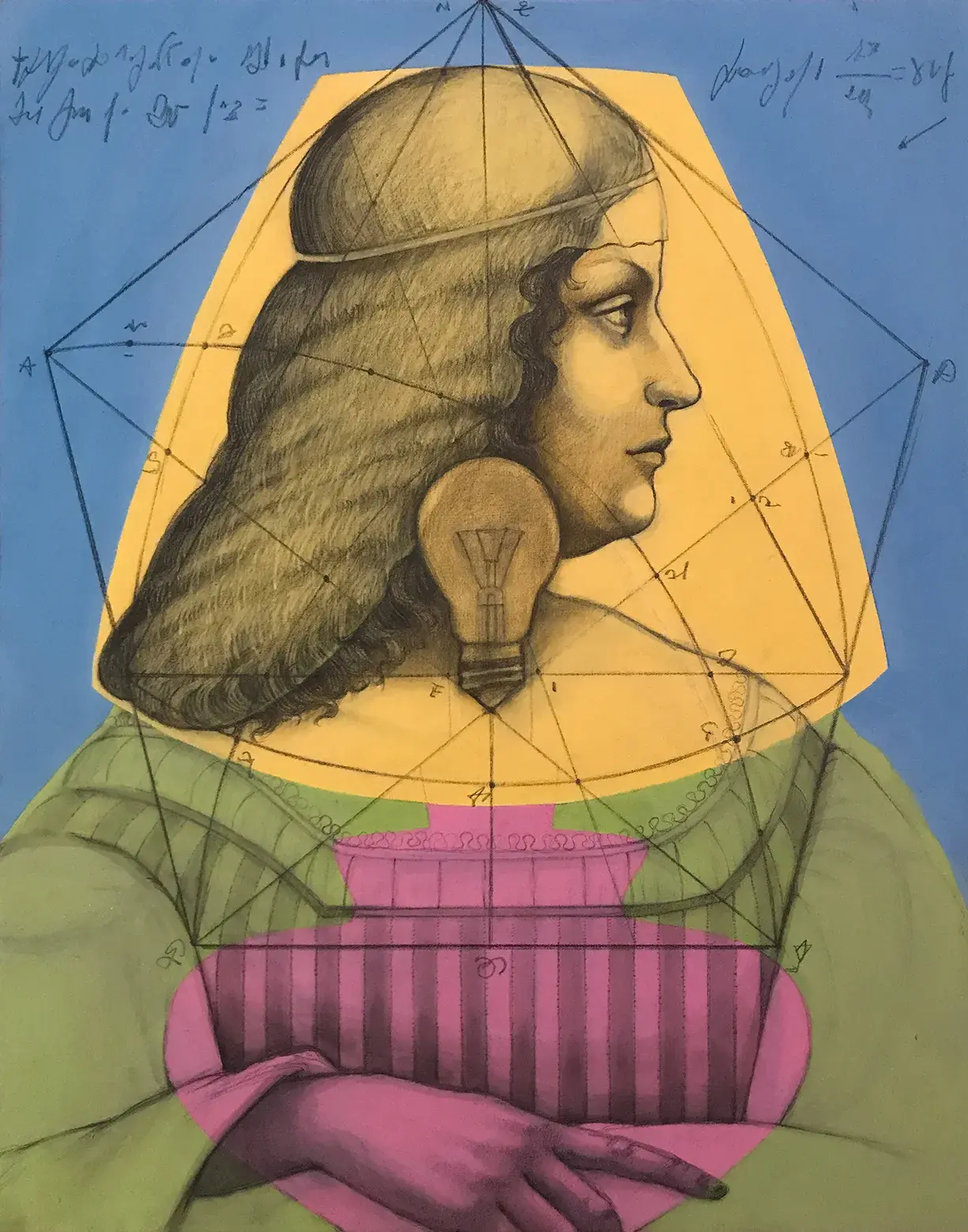
MANTOVANIA is a story of intellectual love: Vania Elettra Tam arrives in Mantua and Mantua, with its somewhat secret elegance, its Renaissance geometries and its understated irony, slips under her skin. It is not simply a matter of “settling in”, but a creative osmosis in which the city becomes a matrix, the artist becomes a lens, and from this fusion emerges an imaginary world that could not exist anywhere else.
The artist captures its most vital spirit: its ingenuity, inventive freedom, and ability to transform everyday life into theatre. In the birthplace of Commedia dell’Arte, Tam performs extemporaneously, choosing to put her face on the line. Literally. She steps into her characters, inhabits them, interprets them, lives them. Not out of a desire for protagonism, but out of complicity, as if to say, “I’m here too”, sharing the neuroses, fragilities and obsessions of her protagonists.
Her women — housewives, frustrated dreamers, television addicts, professionals, domestic workers — are not characters, but different incarnations of the everywoman. There is no single Vania/Barbie in a hundred versions: there is one woman, multiplied, shattered and reassembled in an irresistible kaleidoscope. And that kaleidoscope is a vortex of puns, double entendres, pop references, allusions to cinema, literature, comics and popular magazines. The apparent lightness is merely the surface, concealing a complexity that Tam handles with almost surgical ironic precision.
Vania’s works appear simple, immediate, and enjoyable. But it is a trick, a seduction. Behind every image lies a narrative structure, a kind of visual screenplay that transforms everyday life into a theatre of cruelty — ironic, affectionate, ruthless and smiling all at once. The protagonist is not the artist, but woman in her entirety. Naïve and seductive, demure and uninhibited, fragile and determined. A figure who endures, dreams, and imagines alternatives to the monotony of reality.
Amid the whirlwind of identities that Tam brings to the stage, one can glimpse a tension towards the future. Her women, multiplied like seeds carried by the wind, seem to herald a change of season, while through the cracks of the Anthropocene filters the light of the gynocenocene — a possible era in which care becomes a telluric force and sensitivity a form of resistance.